
Posted On
October 2, 2026

Last Updated On
October 2, 2026

By
Scott

Toll charges belong in your operating records as they happen. When they arrive later on a monthly statement, dispatch and accounting have to work backward to identify equipment, check entries, and bring the records up to date.
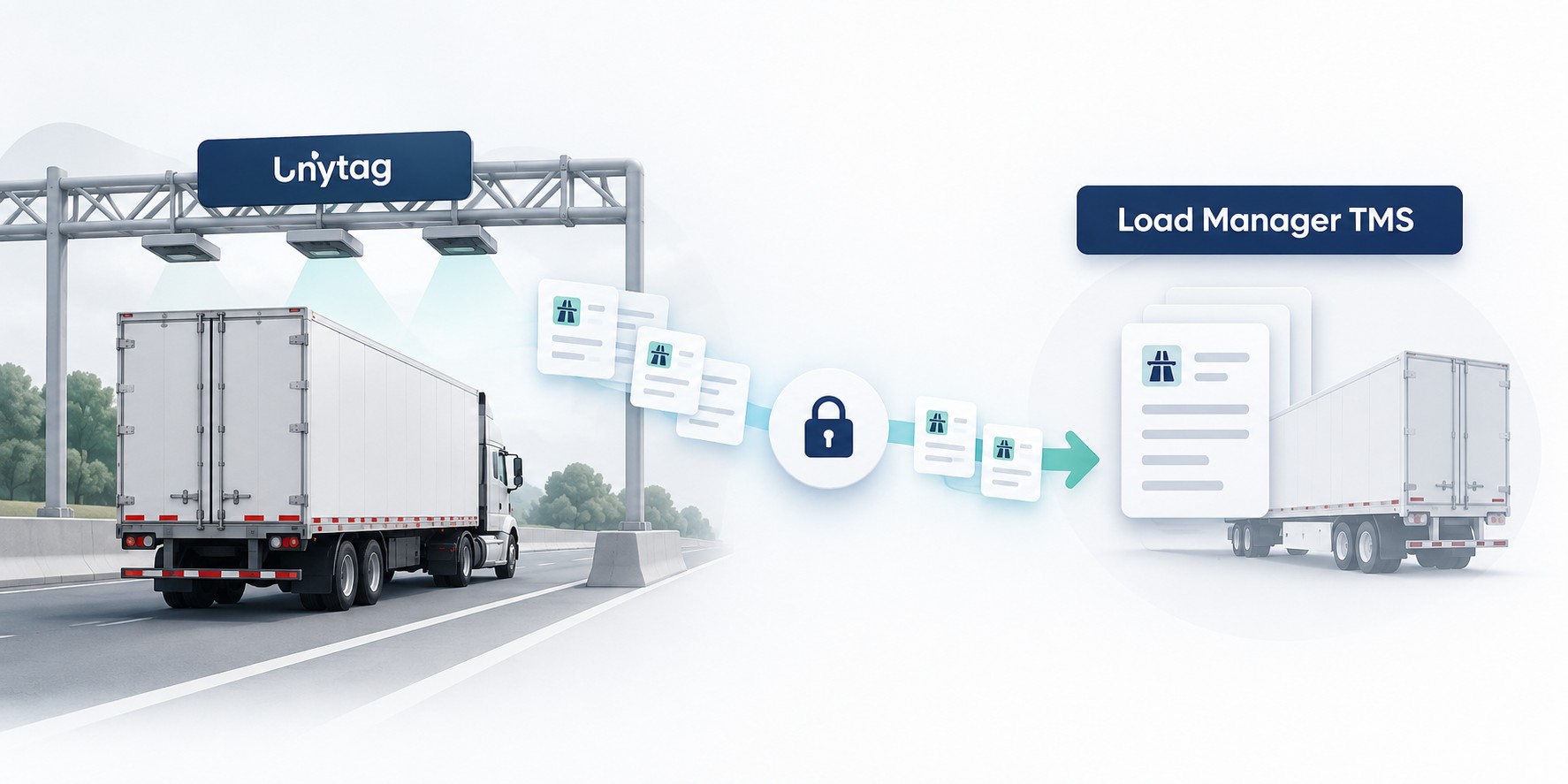
Load Manager Inc. has completed the integration between Load Manager TMS and Unytag. It is currently in the testing phase. The completed connection automatically posts tolls captured by Unytag into the carrier’s Load Manager account. Testing is underway; the integration has not yet been released for general availability.
For carrier owners, dispatchers, and fleet and accounting managers, the integration is designed to provide a more direct path from a toll transaction to a usable record. Here is how the completed connection works as testing continues.
Unytag sends toll charges directly into Load Manager through a secure API. Your team does not have to enter those charges manually or reconcile a spreadsheet to move them into the system.
Tolls can arrive as they happen instead of waiting for a monthly toll statement. That gives your team earlier visibility into charges and keeps toll records closer to the daily work of managing equipment and operating costs.
The connection also removes an extra handoff between systems. Unytag captures the toll, sends it to Load Manager, and receives a response showing whether the record was accepted or needs attention.
The integration matches each toll to a trailer using its Unit #—the same number dispatchers already use in Load Manager. There is no separate equipment numbering system for your team to learn.
Each saved toll includes the state, amount, and exact time of the transaction. Those details give dispatch and accounting a clear record of what was charged and when it happened, attached to the correct trailer.
Consistent Unit # records matter. If Unytag sends a trailer number that Load Manager does not recognize, that toll needs attention before it can be saved. Keeping trailer records complete helps charges move through automatically.
A batch of toll transactions can contain good records alongside a record that needs correction. The integration handles each toll individually, so one problem does not prevent the rest from saving.
For example, if a batch includes a toll for an unknown trailer number, the valid tolls still post into Load Manager. The response tells Unytag exactly which record failed and why.
That makes follow-up specific. The team can address the problem trailer record without treating the entire batch as a failure. Valid charges keep moving, while the exception remains available for review.
Rejected tolls are kept, not discarded. If a toll cannot be matched because the trailer has not been added to Load Manager, it remains available to be replayed once that trailer is in place.
The reject list also serves as a useful equipment to-do list. It can show which trailers still need a Unit # so the team can complete those records and resolve the outstanding tolls.
Resending transactions is safe because the integration detects duplicates and skips them. A toll that has already been accepted will not be posted again when Unytag resends it.
Together, retained rejects and duplicate detection support a straightforward correction process: fix the missing trailer information, replay the rejected records, and avoid duplicate charges in the carrier’s account.
Each carrier receives its own access token. Toll charges sent with that token can land only in the Load Manager company that owns it. One carrier’s data cannot post into another carrier’s account.
This keeps company access clearly separated while allowing Unytag to send toll data directly to the correct account.
The integration also supports testing against a demo company in production. Unytag can safely test the connection there without touching real customer data.
Once testing is complete and the integration is ready for rollout, carriers using both Unytag and Load Manager can be connected by issuing a token. No custom development is needed for each carrier. During the current testing phase, contact Load Manager to discuss your setup and the next steps for getting connected.
The completed integration being tested matches tolls to trailers and records their state, amount, and exact time. Separately, the next planned capability is to tie each toll to the specific load the trailer was hauling.
Load-level toll matching is upcoming and is not available today.
Once available, this capability will help each load show its true toll cost. Carrier owners and accounting managers will be better able to see real lane profitability and bill tolls back to customers more accurately.
Automatic trailer-level toll posting provides a practical foundation: timely records, clear equipment matching, and a way to resolve exceptions without losing transactions. The current focus is testing the completed integration before making it generally available.
Already using Unytag and Load Manager TMS? Contact Load Manager to discuss getting connected, learn about the testing phase, and plan the next steps for your carrier account.